Be yourself; Everyone else is already taken.
— Oscar Wilde.
This is the first post on my new blog. I’m just getting this new blog going, so stay tuned for more. Subscribe below to get notified when I post new updates.
HELLO
Be yourself; Everyone else is already taken.
— Oscar Wilde.
This is the first post on my new blog. I’m just getting this new blog going, so stay tuned for more. Subscribe below to get notified when I post new updates.
So what is media and information? Media and Information literacy enables people to interpret and make informed judgments as users of information and media, as well as to become skillful creators and producers of information and media messages in their own right. Most of the students in Quezon City Science High School use media in their everyday lives. That’s why we can say that media is very powerful in our society.
Currently, Media and Information Literacy is very important. Through this, information and knowledge can be shared to other people. Everyday new knowledge is made and because of technologies we can easily access and able to share this information. However, we need to be careful when it comes to spreading information since it can affect how a person reacts to a certain situation. We need to be able to distinguish what is real news from what is fake news in order to avoid misleading people.
Copyright and plagiarism, as defined by Merriam Webster, is the exclusive right, given to the creator of a creative work, to reproduce the work, usually for a limited time. Copyright is intended to protect the original expression of an idea in the form of creative work, but no the idea itself. While plagiarism, as defined by Oxford University, is presenting someone else’s work or ideas as your own, with or without their consent, by incorporating it your work without full a full acknowledgement.
Today, the media has a tool to help human civilization to be aware of events in every part of the world. Different social media platforms have been created. Media and Information Literacy teaches us that we must be ethical when it comes to handling information because one wrong move and you could commit Scientific Misconduct.
As a student, I think that Internet Cafes are very important. They help cater to the need of students who can’t afford to have laptop and computers at home. It is also helpful to people who want to avail the printing services of the cafe. However, these cafes need to limit their hours when students can avail their services so that students will be motivated to go to school.
Group 1
What is Citizen Journalism? What are the advantages of Citizen Journalism? Cite some examples.
technology and the global distribution of the Internet to create, augment, or fact-check media on their own or in collaboration with others
• How does the Internet change the way news is reported? Do media companies limit their stories to their journalists only? Why/why not?
• What are the issues of Citizen Journalism? What mechanisms do they have to prove the accuracy of their stories?
• Do you think making ordinary citizens news reporters on TV or online develops more awareness on news content and mass media literacy?
BADNEWS
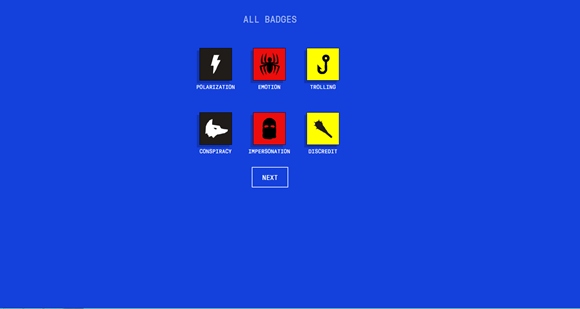
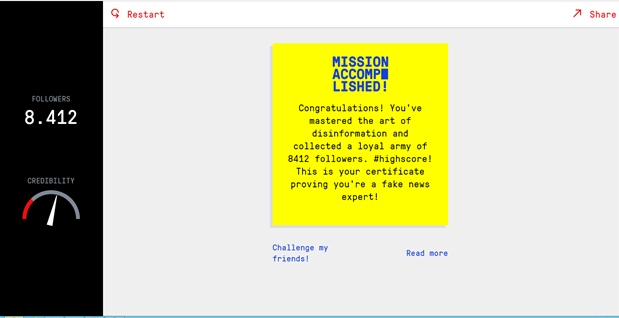
This game was about gaining followers inside the game through six different tactics by posting fake news on the web. Based on my experience, it was amusing being a fake news writer and posting fake news on the web and playing together with my classmates. I know it is wrong and against my moral values but still enjoyed this game because of the challenge to increase your followers. As I played the game, I have encountered different posts suggested by the narrator of the game to help me to be a better fake news writer. The narrator also asked me several questions about my insights on posts that will be more trending in the social media world. I am also glad that the social media platform, Twitter was used a medium to spread fake news on people. It was funny to see Donald Trump and impersonate him to spread fake news. This game was also mind blowing for me because the question in the early part of game was useful in the later part for you to gain more followers. I highly recommend this game to be played by my fellow students in the whole world because it may and can help you to spot a fake news post in the reality. This is because of the reason that you have already experienced on how to be a fake news writer, that is why with this kind of game developed by researchers in University of Cambridge, I can assure you that this game will teach people to better identify fake news. People will be more alert and aware because of this. Below you can see my badges and the number of followers that you will also encounter in the game. I only got almost 8,500 followers but I bet that you can earn more. GOOD LUCK!
The first step in doing this video was collaborating with my groups. We planned the story line and how we will took pictures and video clips of our group mate, David as the protagonist in our story. After filming and taking pictures, we uploaded the files in Google Drive so that the quality will be the same. Upon uploading, the pictures and video clips were edited by our group mate Josh. After that, we uploaded the video in Youtube so that our work will be watch anyone in the world.
What I enjoyed the most was filming David in our MIL lab in Quezon City Science High School. It was fun taking pictures of him while acting to be hacking the Edmodo Account of Josh, my other group mate in order for us to interpret what is Information Literacy. He was funny when he was typing fast in the video.
It was difficult creating the timeline or story line of the video. At first we don’t know where to start because we were not sure who will be filmed and whose cellphone will be used to film. We also searched and tested each cellphone’s camera capability so that we can have a good quality video in our Audio-Visual Presentation.
I think what really worked was the teamwork in our group. It will always be better to have 4 brains at a time working rather than working individually on your own.
For our group, next time would be a much more fun activity and a happy one. I am contented in each member’s effort in working together to create such video to be uploaded in Youtube.
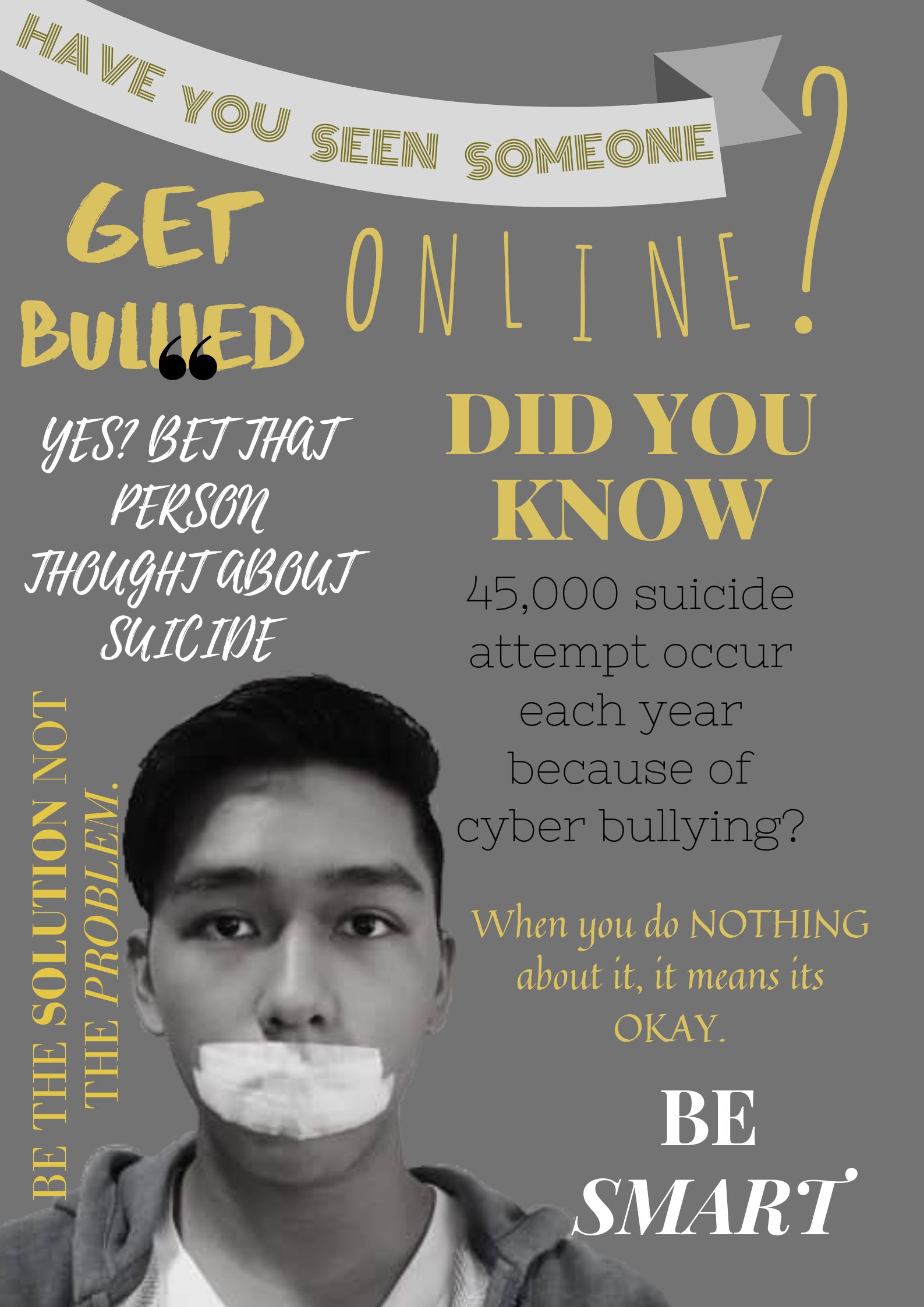
Cyberbullying is bullying that takes place over digital devices like cell phones, computers, and tablets. Cyberbullying can occur through SMS, Text, and apps, or online in social media, forums, or gaming where people can view, participate in, or share content.
Cyberbullying can harm the online reputations of everyone involved – not just the person being bullied, but those doing the bullying or participating in it.
It is a must to be stopped especially with this kind of technology in our generation. That’s why be AWARE.
This is an example post, originally published as part of Blogging University. Enroll in one of our ten programs, and start your blog right.
You’re going to publish a post today. Don’t worry about how your blog looks. Don’t worry if you haven’t given it a name yet, or you’re feeling overwhelmed. Just click the “New Post” button, and tell us why you’re here.
Why do this?
The post can be short or long, a personal intro to your life or a bloggy mission statement, a manifesto for the future or a simple outline of your the types of things you hope to publish.
To help you get started, here are a few questions:
You’re not locked into any of this; one of the wonderful things about blogs is how they constantly evolve as we learn, grow, and interact with one another — but it’s good to know where and why you started, and articulating your goals may just give you a few other post ideas.
Can’t think how to get started? Just write the first thing that pops into your head. Anne Lamott, author of a book on writing we love, says that you need to give yourself permission to write a “crappy first draft”. Anne makes a great point — just start writing, and worry about editing it later.
When you’re ready to publish, give your post three to five tags that describe your blog’s focus — writing, photography, fiction, parenting, food, cars, movies, sports, whatever. These tags will help others who care about your topics find you in the Reader. Make sure one of the tags is “zerotohero,” so other new bloggers can find you, too.
 Danica's Blog